Friday, May 15, 2020

What You Need to Know About Missouri’s Lawsuit Against China Over COVID-19

From The Daily Signal.com (April 22):
The devastation caused by the COVID-19 pandemic is compounded by the possibility—some would say likelihood—that it could have been averted or its impact mitigated.

If, for example, China failed in a timely manner to disclose the threat of the new coronavirus or misrepresented its cause or severity, there could be political or economic consequences.

But could China actually be sued by COVID-19 victims? Missouri appears to think so and filed suit in federal court Tuesday.

Suing a government is different than suing private individuals or companies. The first, and biggest, hurdle is the legal principle, often called sovereign or state immunity, that a government cannot be sued without its consent.

In the U.S. Constitution, this principle is the basis for the 11th Amendment, which prohibits lawsuits in federal court “against one of the United States by Citizens of another State, or by Citizens or Subjects of any Foreign State.”

Sovereign immunity, however, is not absolute. A government can give its consent to be sued in certain circumstances or can waive its immunity in different ways.

Congress enacted the Foreign Sovereign Immunities Act (FSIA) in 1976 to clarify the circumstances in which a foreign government can be sued in American courts.

It says that “a foreign state shall be immune from the jurisdiction of the courts of the United States and of the States except as provided in” that law. The Supreme Court has said that the FSIA is “the sole basis for obtaining jurisdiction over a foreign state in the courts of this country.”

China, therefore, can be sued by COVID-19 victims only if the suit fits within one of the exceptions in the Foreign Sovereign Immunities Act.

On April 21, Missouri filed suit in U.S. District Court against the People’s Republic of China, several Chinese government entities, the Wuhan Institute of Virology, and the Chinese Communist Party.

Missouri alleges that China misled the World Health Organization about the nature of the coronavirus that causes the disease COVID-19, allowed it to spread, delayed reporting evidence of human-to-human transmission, and even censored information about it.

Those actions, Missouri says, allowed the virus to spread rapidly around the world, into the United States, and into Missouri. The lawsuit claims that these actions violated Missouri law and harmed Missouri residents. [read more]
Good for Missouri! This should really be a class or in this case a “state” action suit.

Another article on the subject matter:
DHS Report Says China Lied About Extent of Pandemic in Order to Hoard Medical Supplies

Thursday, May 14, 2020

Report: US Intelligence Says Chinese Agents Spread Texts To Stoke Coronavirus Panic

From Daily Caller.com (April 22):

U.S. intelligence officials believe that agents of the Chinese government helped boost fake claims through social media and text messages in March aimed at stoking panic over nationwide lockdowns over the coronavirus pandemic, according to a report from The New York Times.

The newspaper cited six intelligence officials all in different agencies who said that Chinese agents helped spread messages claiming that the Trump administration was planning to impose curfews, and would deploy troops to prevent widespread looting and rioting.

The officials are keenly interested in the operation because many of the messages were circulated through text message.

Two officials told The NYT that they do not believe that Chinese operatives created the messages, but that they merely helped spread them.

The messages, which circulated widely in mid-March, included vague claims of draconian nationwide lockdowns citing sources from the Pentagon, National Security Council or FBI. Some urged recipients to take money out of their bank accounts and fill up on gas ahead of the purported lockdowns. [read more]

Wednesday, May 13, 2020

‘THIS IS CRAZY!’: Chinese-Made Drones Are Monitoring Streets In 20 States To Enforce Social Distancing. U.S. Officials Are Concerned About Spying.

From Daily Wire.com (April 19):

An MSNBC segment from late last week sparked controversy after it shined a light on a program that some localities across the U.S. are participating in that uses Chinese-made drones to monitor American citizens in an effort to enforce social distancing.

“The drones make it easier for police to see into certain areas where access by patrol cars is more difficult,” MSNBC reported. “That includes tight spaces between buildings, behind schools, and in backyards. Failure to comply could lead to a summons or a thousand dollar fine.”

On the issue of privacy, Elizabeth Democrat Mayor J. Christian Bollwage says, “If these drones save one life, it is clearly worth the activity and the information that the drones are sending.”

“The drones donated by DJI, a Chinese company, have gone to 43 agencies in 22 states, all to help enforce social distancing rules,” MSNBC continued. “Authorities say the drones aren’t taking pictures or collecting evidence. It’s a high-tech warning against a deadly virus.” [read more]

Big Brother is watching. Sounds like some mayor is on a power trip.

Tuesday, May 12, 2020

Climate Models and COVID-19 Models

From American Thinker.com (April 15):

Computer models are seductive even though they are very often completely wrong. The more complicated they are the greater chance that they are wrong. Like children, they copy their parents -- the model architects. Confirmation bias involves cherry picking facts to obtain a result consistent with preexisting beliefs. A complicated computer model with many degrees of freedom is a perfect environment for confirmation bias to have its way. The investigator usually will believe, or at least claim, that his model is objectively setup without bias entering into the effort.

Not all computer models are wrong. Sometimes they produce good predictions. But all too often they fail and the failures are not acknowledged because the modelers are emotionally or ideologically attached to their creation.

The claim of objectivity by academic modelers contrasts with the standard leftist or academic belief that practically everyone is a racist, driven by unconscious motives. Google “implicit bias” if you want to know more. When professors are pushing racial justice theories everybody is driven by unconscious forces. But when constructing computer models all is well.

Complicated models are always full of escape hatches that can explain away any failure. Climate models still enjoy support in spite of 30 years of failure. The failures are alleged to be due to things like chaotic variation or data that has to be adjusted because it does not agree with the model. COVID-19 models are new but have had notable failures. For example, the IMHE model predicted up to two million deaths but has been repeatedly adjusted and now is down to 60,000 deaths. Usually it is claimed that the model is not wrong, but deaths are lower because the American people have been good boys and girls.

In both climate models and disease models, the associated scientific establishment has a vested interest in the validity of the model. If the climate models are a waste of time, then climate science and its practitioners have been wasting everyone’s time. The scientific establishment behind COVID-19 modeling is wedded to a particular method of dealing with an epidemic. Their approach is to constrain the spread of the disease with social control until a vaccine is available. [read more]
Other articles dealing with the subject:
It’s interesting that climate models and the COVID-19 spread models are a mystery. Why do we have to social distance six feet? Why that number? Why not seven feet? Five feet? It would be helpful if a reporter asked questions about the model during Trump’s press conference. Maybe the press isn’t smart enough to ask the question or maybe they didn’t want to put Dr. Fauci on the spot.

All computer models are just theories about a specific phenomena. Therefore data inputted into the model has to be valid and the model has to be calibrated correctly. The model should be ran more than one time to get a consistent result. Also, the models should be ran with different scenarios if possible. For instance, in this case of the coronavirus, the model should contain agents that social distance in one scenario and agents that don’t social distance in another scenario. Ones that wear masks and ones that don’t, etc. I am using the word “agent” because I am guessing this is an agent-based model the epidemiologists are using. If the agents have variability the better off the model is. I understand their model only used a model that used self-quaratine-- that was part of their assumptions. That’s not good. Meteorologists use different computer models to better grasp what’s going on with the weather. I would hope epidemiologists would do the same. Disease spread is complex too. I can imagine it is hard to predict how a virus would mutate for example. Would it be more or less deadly? More or less spreadable? But still to try to have any variability is better than none. Anyway, just understand computer models are just a tool—not the final answer.

Also, computer models, especially ones where the agents are represented as people, never take into account side-effects or what economist Thomas Sowell calls “stage two thinking.” The models are usually never holistic. They never take into account the psychological, sociological, economical, and yes the spiritual side-effects of their models.

Monday, May 11, 2020

What You Need to Know About Antibody Tests for COVID-19

From The Daily Signal.com (April 19):

Returning to a semblance of normalcy in this country will require the ability to gauge a person’s immunity status to the COVID-19 virus using serology tests—that is, blood tests that detect antibody levels.

People who were infected by the virus and recovered generated a durable immune response by developing antibodies to antigens specific to the virus.

That is to say, the body’s immune system creates molecules called antibodies that are designed to target and attack certain unique features of the virus called antigens.

People who have developed the antibodies to the virus are able to fight it off if the virus enters their bodies again, so those with the antibody are unlikely to be reinfected with the virus and unlikely to be able to transmit the virus to anyone else.

In this way, knowing the immune status of the population will be important to assessing the risk of the community returning to work.

Furthermore, being able to detect an individual’s immune status will also help public health researchers and officials determine the virus’ penetrance, the extent to which it has infected the population.

This is possible because certain antibodies persist in the blood long after the infection, even if an individual never showed any symptoms from the virus.

The ability to detect previous asymptomatic infections will be important because recent evidence suggests that a potentially large proportion of infected people never show symptoms.

Universal COVID-19 screening on hospital labor and delivery wards in New York City found that, of the women who tested positive for the virus, 29 out of 33 were asymptomatic at diagnosis. Of those 29 women, 26 of them remained asymptomatic, while only three developed fevers.  [read more]

Friday, May 08, 2020

Inside Hitler’s Germany Part 2

[Hitler] declared that public education was compulsory and the children could not be educated at home. The state, not the family, or church had first dibs regarding the child's education.

If Germany was going to be the country Hitler envisioned it to be, the children would have to belong to the Reich. To parents, Hitler calmly said, "Your child belongs to us already..what are you? You will pass on. Your descendants, however, now stand in the new camp. In a short time they will know nothing else but this new community."

Hitler believed quite rightly, that he who controls the youth controls the future. Parents were responsible for raising the child's body, but the Reich would educate the child's soul.

Private or denominational schools were later closed in Germany due to increased taxes and excessive regulation.  In the end, educational options for parents were squeezed out.

The children in Germany were subjected to films that presented the Nazis' view that the Jews were subhuman and that they were an unnecessary burden on society. Darwin's evolutionary notions were also presented in the classroom to extol the virtues of the Aryan race (the Germans) and that the evolutionary idea of survival of the fitness could be hurried along by the extermination of the weak. Since only the fittest survive it makes good sense that "might makes right." Hitler asked, "Why can't we be as cruel as nature?"

With private schools abolished by 1938, all education was unified under the Nazi ideology. Textbooks were rewritten to reflect the view of racial fitness, the rationale for military expansion, and an emphasis on German history and culture. Those who did not fall in line with the Nazi agenda were reprimanded, expelled, or executed. If teachers wanted to keep their jobs, they had to take an oath of loyalty to Hitler.

The purpose of school was not independent thought, but rather to transform the attitude and values of children to conform to what the state wanted.

Hitler's educational philosophy was patterned after that of the Soviet revolutionaries. His goal was to build an army of young radicals who would pay lip service to the past but forge a new path that would ensure that German ideals were passed on from generation to generation.

Truth was now defined as that which promoted the Nazi state; the goals of a revived Germany were to take precedence over individual thought and research.

Children had to be indoctrinated and understand that groupthink was more important that the individual. Through psychological pressure, any student who did not agree with the educational agenda stood out as an  embarrassment.

Young people were instructed to encourage their parents to become good Nazis.

Source: When a Nation Forgets God: 7 Lessons We Must Learn from Nazi Germany (2010) by Erwin W. Lutzer.

Thursday, May 07, 2020

3 Reasons Why States Shouldn’t Get a Congressional Bailout

From The Daily Signal.com (April 19):

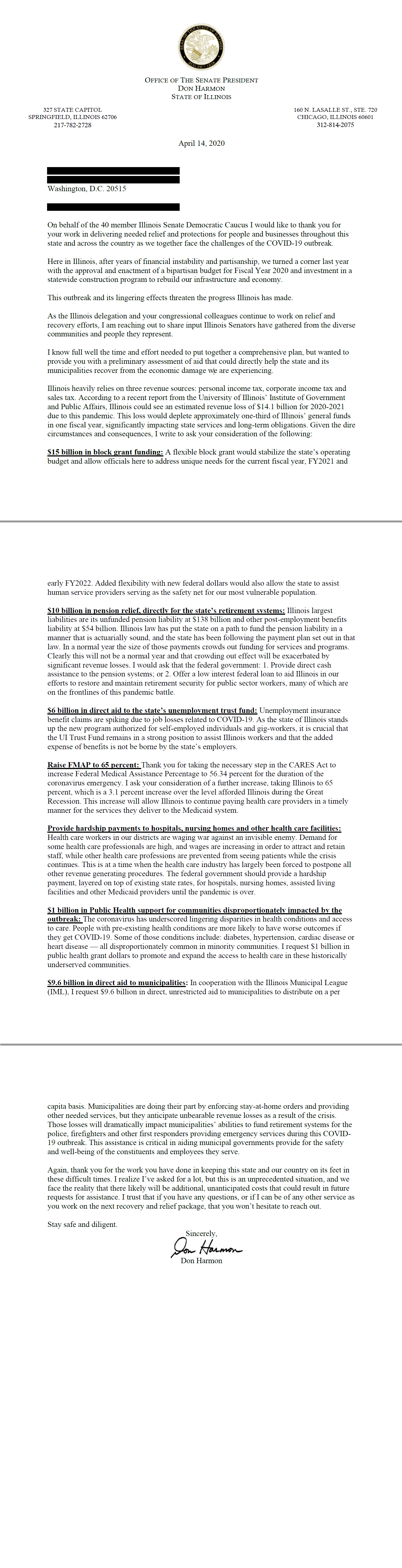
Illinois State Senate President Don Harmon sent a letter April 14 on behalf of the Illinois Senate Democratic Caucus to members of Congress requesting $40 billion in federal funds for the beleaguered state.

Although the letter comes under the guise of unprecedented COVID-19 disruptions, the purposes for which Illinois and other states seek additional federal funds are anything but unprecedented. Opening the floodgates to federal taxpayer dollars to cover states’ self-imposed fiscal woes would only lead to even further fiscal recklessness.

Here are three ways that additional federal funds to states won’t help fight COVID-19 and will likely hurt federal taxpayers and states’ budgets in the long-run.

1. Congress already provided enough COVID-19 relief—states want unfettered funds. The Illinois letter makes clear that the state doesn’t need any more money to combat COVID-19. And, given the possibility that states are having to devise new spending related to COVID-19 just in order to use up the $150 billion they’ve already received, it’s clear that states have enough funds to combat the virus.

States have already received an unprecedented amount of federal funding, including both direct and indirect support.

……………………

2. The money would reward decades of reckless mismanagement, including bailing out unfunded pensions. COVID-19 measures have been in place now for about five weeks, but states’ unfunded pension systems—the driving force behind states’ fiscal woes—are closer to five decades in the making.

Across the U.S., state and local governments have promised at least $5 trillion more in pension and other post-employment benefits than they’ve set aside to pay.

The Illinois’ letter requested $10 billion for its insolvent pension system—an amount that would cover one year’s worth of the state’s pension costs, or about five years’ worth of the shortfall between what the state is required to contribute and what it has actually contributed.

………………

3. The federal buck won’t stop here. First was tens of billions to cover states’ increased Medicaid and other social safety net program costs, and then over $200 billion in direct funding and up to $500 billion in short-term loans.

After the third bill—the CARES Act—was passed, there were requests for an additional $150 billion in unrestricted aid to states, a request from governors for $500 billion, and Illinois’ separate request for $40 billion.

If Congress were to fulfill Illinois’ request and provide the same amount on a per-capita basis to the rest of the U.S. states, the price tag would top $1 trillion, with New York receiving $61 billion, Texas $92 billion, and California $125 billion. [read more]

Wednesday, May 06, 2020

Could COVID-19 Have Come From Chinese Lab? 4 Things to Know

From The Daily Signal.com (April 12):

Once dismissed as a conspiracy theory, the notion that the new coronavirus spread from a research lab in Wuhan, China has gained more mainstream backing in academia, the media, and at least one  government.

“There is a credible alternative view … based on the nature of the virus,” a senior British government official told The Daily Mail. “Perhaps it is no coincidence that there is that laboratory in Wuhan. It is not discounted.”

Authorities around the world say Wuhan, the capital of China’s Hubei province, is where the new coronavirus that causes the disease COVID-19 originated.

…………….

Spoehr said Chinese government officials did invite suspicion with their actions.

“Like a witness at a trial that has a reputation for not being truthful and honest with facts, a jury is not likely to believe them,” Spoehr said. “In this case, people are more likely to assume the worst about China and believe [the new coronavirus] started in a lab.”

Here are four things to know about the Wuhan lab theory.

1. Not a Biological Weapon

First, what it’s almost certainly not.

Although early internet gossip pushed the coronavirus as a biological weapon engineered in a Chinese lab, many experts say there is no credible evidence of that.

A study in mid-March by Scripps Research, published by the journal Nature Medicine, strongly states that COVID-19–also referred to as SARS-CoV-2–follows the natural process similar to related strains of coronavirus.

……………

A leading expert on bioweapons is definitive on the matter.

“There is no evidence whatsoever that this is a bioweapon or that it was accidentally released from the Wuhan lab,” said Michael Osterholm, director of the Center for Infectious Disease Research Policy at the University of Minnesota and author of “Living Terrors: What Our Country Needs to Survive the Coming Bioterrorist Catastrophe.”

“Today, with the genetics we have on these viruses and how we can do testing, we can almost date them almost like carbon testing so radiocarbon and you want to know how old a block is or something like that,” Osterholm said during an interview in March on “The Joe Rogan Experience” podcast.

Osterholm said the new coronavirus “clearly jumped from an animal species, probably the third week of November to humans.”     

“I don’t believe that there’s any evidence linking this to … an intentional release or an accidental release, or that it’s an engineered bug. It’s not,” he said.       

…………

2. Doubts About Seafood Market in Wuhan

The prevailing wisdom that the virus “was spread by people who ate contaminated animals at the Huanan Seafood Market in Wuhan,” Ignatius wrote in the Post, “is shaky.”

He noted that “bats weren’t sold at the seafood market, although that market or others could have sold animals that had contact with bats.”     

Wuhan authorities closed that seafood market and disinfected it without swabbing individual animals and cages, or drawing blood from workers, according to The New York Times.

“It is absolutely clear the market had no connection with the origin of the outbreak virus, and, instead, only was involved in amplification of an outbreak that had started elsewhere in Wuhan almost a full month earlier,” Richard Ebright, a Rutgers University professor of chemistry and chemical biology, told CNN.     

A study published Jan. 24 found that the early coronavirus cases were not connected to the Huanan Seafood Market in Wuhan. The study was published in February by The Lancet, a weekly peer-reviewed medical journal.

………………

3. Accidentally Caught in Lab and Spread?

COVID-19 “also could have occurred as a laboratory accident, with, for example, an accidental infection of a laboratory worker,” Ebright, of Rutgers University, told the Post columnist.

Coronaviruses in bats were being studied in Wuhan only at Biosafety Level 2, “which provides only minimal protection,” Ebright said. Biosafety Level 4 is the highest level of security.

In a December video from the Chinese Center for Disease Control and Prevention lab, staffers are seen “collecting bat coronaviruses with inadequate [personal protective equipment] and unsafe operational practices,” the Rutgers microbiologist is quoted as saying in the Post.

Cheng noted that COVID-19 is a new strain of coronavirus, and that Chinese researchers likely didn’t anticipate the need for the highest security level.

……………..

4. China Driving Suspicions

Aside from any evidence about starting in a lab–anecdotal or otherwise–China’s early response to the coronavirus may have been a reason that suspicion spread more quickly than the disease itself.

The misinformation from delayed what would have been an early response from the international community. Later, mid-level Chinese government officials accused the U.S. Army of planting the virus in Wuhan.

Sen. Tom Cotton, R-Ark., was one of the earliest members of Congress to raise alarm about the coronavirus.

Cotton’s office wasn’t ready to weigh in on the origins of the virus or whether Congress would investigate. But the senator said China is responsible for spreading misinformation about COVID-19.

“China must be held accountable for unleashing this plague on the world,” Cotton told The Daily Signal in a written statement, noting he has introduced legislation to do just that.

In early January, eight Chinese doctors–including Dr. Li Wenliang–warned about the coronavirus. The government  brought them in for questioning and condemned them for “making false statements.” [read more]

Another related story:

China Is Working Overtime to Suppress Research About Coronavirus Origin

Tuesday, May 05, 2020

4 Courses the Coronavirus Could Take

From The Daily Signal.com (April 10):

Since first emerging in China late last year, the novel coronavirus quickly has become a global crisis. The SARS-CoV-2 virus and COVID-19, the disease it causes, have spread rapidly across the world, infecting more than a million people and taking the lives of tens of thousands.

Along the way, the virus has slowed a majority of the world’s economies, including some of the largest.

So, which paths might this pathogen take?

At this point, it’s impossible to predict exactly how the coronavirus pandemic will evolve. After all, the virus gets a vote.

But based on historical patterns, comparisons to other outbreaks, and comments from experts, at least four paths seem possible and plausible.

1. One-Off Event

In this scenario, the initial outbreak of COVID-19 is tamed in coming months. The new coronavirus largely disappears and no longer poses a significant threat, to the point that developing a vaccine becomes merely a formality. Americans return to work and school. Life returns to normal. 

Although this is clearly the best-case scenario, it isn’t entirely without precedent. The SARS outbreak of 2002-2003 was largely a one-off event and lasted only six months. The virus has not posed a significant threat to public health since the initial outbreak.

……………..

2. A Second Wave

Spring has sprung and summer is on its way. Americans want to get outside and shake off coronavirus-induced cabin fever. If social—that is, physical—distancing restrictions are eased, lifted, or ignored too soon, there could be an incalculable resurgence of the virus—and the unpleasantness that goes along with it.

Perhaps the best example of this scenario involves the 1918-1919 Spanish flu pandemic. According to a 2007 study, lifting public health restrictions too early in some U.S. cities caused a resurgence in cases, resulting in a second wave of infections and disease.

This possibility calls for caution in the months ahead.

3. It’s Seasonal

In this scenario, the United States overcomes the initial outbreak as warmer weather prevents the virus from spreading as effectively and efficiently. Unfortunately, despite the break in the rate of infection, the country sees a resurgence of cases in the fall as the virus settles into a seasonal pattern.

Many viruses follow a seasonal pattern. Seasonal influenza is a good example: Every year, a flu outbreak sweeps the United States from roughly November through March, infecting tens of millions of Americans—and taking many lives.

In the case of annual flu outbreaks, studies show the influenza virus survives longer at lower temperatures and lower humidity such as experienced in winter. The scientific jury is still out on seasonality for the new coronavirus.

4. Persistent Problem

In this scenario, the outbreak isn’t a unique event and isn’t strongly affected by changing weather patterns. Instead, the virus remains problematic for the foreseeable future.

Governments and scientists are left fighting new outbreaks throughout the country as they emerge year-round. Even with the development of therapeutics, a true resolution comes only when a vaccine is developed and mass produced. [read more]

Another related article:

Coronavirus and Public Health: 5 Glimpses of What the Near Future Looks Like

Monday, May 04, 2020

How FDA’s Emergency Powers Speed Drugs, Other Supplies to Fight Coronavirus

From The Daily Signal.com (April 9):

The shortage of tests for diagnosing COVID-19, like other aspects of the public health crisis, has drawn attention to the U.S. government’s emergency powers.

In recent weeks, the Food and Drug Administration in particular has taken a series of actions to address COVID-19, the disease caused by the new coronavirus.

The Trump administration’s declaration of a public health emergency Jan. 31 triggered provisions in law that permit the FDA to exercise greater discretionary authority in meeting its responsibilities to approve and regulate medical products.

The purpose of those emergency provisions is to ensure that the statutory standards and requirements that the Food and Drug Administration is tasked with administering do not become impediments to quickly getting patients and health care providers the medical products they need in an emergency.

When it comes to regulating medical products such as drugs, devices, and tests, the FDA’s congressionally mandated responsibilities can be summarized as ensuring that the product works as intended and that the product information provided by the manufacturer to doctors and patients is complete, accurate, and based on sound science.

Congress has given the Food and Drug Administration authority to determine whether medical products may be sold in the U.S. That authority extends to every new product, even if it is just a copy of one already on the market (such as a new version of a generic drug), or is a modification to an existing product (such as adding remote monitoring functionality to a ventilator).

The FDA also regulates the content and wording of the information that manufacturers provide, both to consumers (such as medication guides or advertisements) and to physicians and other medical professionals.

The latter is called the product’s “label,” though it actually is a lengthy document containing extensive, scientific information about the product, including how it works, the conditions it has been proven to treat, recommended dosing, and any safety issues such as side effects, interactions with other medicines, or considerations when prescribing it for patients with other medical conditions. [read more]

Friday, May 01, 2020

Inside Hitler’s Germany Part 1

Hitler did not discourage people from attending church. He was a baptized Catholic who had long since  abandoned his faith, but he did not mind if others continued to attend church as long as it did not  affect the way they lived or the values they held. In fact, he explicitly said that  he would not interfere with the specific doctrines of the church, just as long as the  churches were teaching those things that were in harmony with the good of the German people. He called this "Positive Christianity."

[He] believed that he could crush any opposition he might encounter--and in effect he did just that--by intimidation and controlling their salaries. (Because Germany had a state church, the pastors were dependent on the good graces of the government for their income.) Hitler ridiculed the Protestant pastors, saying they were cowering dogs who would do his bidding for the sake of "their miserable salaries.

So, right from the beginning Hitler sought to marginalize the church to guarantee that no Christian influence would be allowed to inform government policy. Worship would have to be a private matter between a man and his God; at all costs the official state policy would have to be based on humanistic principles to give Hitler the freedom to do what was "best" for Germany. He said that the churches must be "forbidden from interfering with temporal matters." The state would have to be scrubbed clean of all Christian convictions and values.

Christmas was turned into a pagan festival; in fact, at least for the SS troops, its date was changed to Dec. 21., the date of the winter solstice. School prayers were banned and carols and Nativity plays were forbidden in the schools; and in 1938 even the name Christmas was changed to Yuletide. Crucifixes were eliminated from classrooms. Easter was turned into a  holiday that heralded the arrival of spring. If religion was tolerated, it had to be secularized  so that it would be compatible with the state's commitment to the greater good of a revived Germany.

He was willing to give the churches freedom, he said, "as long as they did not do anything subversive  to the state." Of course behind that promise lay his own definition of what might be subversive.

Article 24 of the party platform demanded, "liberty for all religious denominations in the State so far as they are not a danger... to the moral feelings of the German race." Hitler spoke approvingly of his "Positive Christianity" that would contribute to the German struggle. He assured [the churches] that he was doing what was best for Germany. Of course, what was "best" would be defined by him, not by the churches, not by the Bible, not even by natural law.

The Germans had become accustomed to the doctrine of the "two spheres," which was interpreted to mean that Christ is Lord of the church, but the Kaiser (or Caesar) is, after a manner of speaking, lord over the political sphere. Allegiance to the political sphere was as high and honorable a duty as was one's allegiance to God. Indeed, allegiance to God was best demonstrated by allegiance to the State.

In the end, [Hitler] wanted to transform the church so thoroughly that every vestige of Christianity would be smashed. As he himself mused, "One god must dominate another."

Source: When a Nation Forgets God: 7 Lessons We Must Learn from Nazi Germany (2010) by Erwin W. Lutzer.

On the TV show Forbidden History it said Hitler didn’t like Christianity because people had equal rights in the eyes of God, but Hitler didn’t see everybody as having equal rights like Jewish people, gypsies, etc.

Thursday, April 30, 2020

I'll Have the Chicken Testicle Soup - Hold the Deadly Virus

Commentary from Ann Coulter on Townhall.com (April 8):

It’s probably a coincidence, but I notice that as businesses go under, jobs are lost, careers are ended and trillions of dollars are drained from the economy, the people most avidly pushing the coronavirus panic are doing quite well.

No politician or government official has taken a salary cut. To the contrary, dusty bureaucrats now find the entire country transfixed by their every utterance. Cable news hosts still make millions of dollars -- and now they get to work from home!

Annoyingly, though, journalists can’t seem to relay the basic elements of a news story: who, what, where and why.

First, who’s dying? It appears to be mostly the old, people with specific medical conditions and vapers.

To be sure, that’s not as important as daily updates on Chris Cuomo’s personal battle with the coronavirus, but it might be kind of important to the 17 million Americans who’ve been thrown out of work, many of whom are not elderly, immunocompromised or vapers.

Second, the “what.” What exactly constitutes a “coronavirus death”?

It turns out a person with Stage 4 lung cancer and a bullet through the heart will be counted as a “coronavirus death” if he also tested positive for the disease, OR merely exhibited symptoms associated with it (symptoms that are coextensive with the flu and pneumonia).

We’re told that, if anything, coronavirus deaths are being undercounted because the numbers don’t include those who die of it at home.

If so, then the death count also excludes those who die at home of other things, like heart attacks and poisonings. Many of these people might have survived -- except they were too scared to go to a hospital or couldn't find an EMT to take them there, per current edicts.

The “where” is: Where did the virus originate, and where did it first land in this country?

Despite the media’s best efforts -- DON’T CALL IT THE “CHINESE VIRUS”! -- people know that the virus began at a wet market in China. [read more]

Wednesday, April 29, 2020

Coronavirus Commission Offers 5-Phase Plan for Getting America Back to Normal

From The Daily Signal.com (April 9):

The National Coronavirus Recovery Commission announced a five-phase plan to get the American economy and public health “back to normal” after the COVID-19 pandemic.

The 17-member commission established by The Heritage Foundation had its first formal and virtual meeting Thursday.

“Americans want to ensure their families are kept safe and healthy,” said commission Chairwoman Kay C. James, president of The Heritage Foundation.

The five phases outlined by the commission are:

—Return to a more normal level of business activity at the regional level based on scientific data.

—Slow the spread of the coronavirus while expanding testing, reporting, and contact tracing.

—Continue to build the science.

—Establish U.S. leadership in leading the free world in economic recovery.

—Reduce future risks of pandemics. [read more]

Tuesday, April 28, 2020

Permanent Repeal of the Jones Act Would Be a Winning Response to COVID-19

From The Daily Signal.com (April 7):

A waiver of the century-old Merchant Marine Act, also known as the Jones Act, was said to be on the table at Friday’s White House meeting between President Donald Trump and U.S. oil producers.

If legislation was passed to make such a waiver permanent, applying it to all shipments, not just oil, that would be a long overdue shot in the arm to the U.S. economy and relieve some of the financial strain households and businesses now face because of the coronavirus pandemic.

A permanent repeal of the Jones Act would provide relief especially to the people of Puerto Rico who have long had added costs tacked onto the prices they pay for food, energy, staples, and other goods shipped from the U.S. mainland. In fact, shipping imports from U.S. ports cost better than 150% more than shipping imports from non-U.S. ports to Puerto Rico.

The Jones Act long has hindered maritime trade between ports within the United States and U.S. territories because its requirements that any shipments of goods between such ports must be done by ships that are U.S.-built, U.S.-flagged, and at least 75% U.S.-crewed make domestically connected shipments prohibitively expensive in comparison to international shipments.

Jones Act-compliant ships are expensive to build and operate, which adds to the price of the goods transported on them when those goods are brought to market.

Americans pay higher prices because goods that otherwise would be transported between states most cost-effectively by sea arrive instead by road or by rail, or by ship from foreign ports. [read more]

Sounds like a good idea to me.

Monday, April 27, 2020

Team USA: 50 companies join Trump's war on coronavirus

From Washington Examiner.com (Mar. 31):

Some 50 major American firms have joined the national war on the coronavirus, many volunteering to shift their focus and even assembly lines to deliver needed supplies to doctors, hospitals, first responders and others on the front lines.

Most said that they answered President Trump’s call for help and were not pushed into action by the government or threat of the Defense Production Act.

The administration has collected a list of about 35-40 major companies that have enlisted. They range from Facebook to Anheuser-Busch to Ford, Fiat Chrysler, and Toyota. “While by no means comprehensive, these are some notable examples of the private sector stepping up,” said an administration official.

Other national and local groups have also brought in corporate partners to help find masks, gowns, and other personal protective equipment.

The National Sheriffs’ Association, for example, told Secrets that its members have received tremendous help from Home Depot, Grainger, and Staples, and that a half-dozen national restaurant chains have offered to help.

Their pleas for help have been “enthusiastically welcomed” by some top corporations, said National Sheriffs’ Association Executive Director and CEO Jonathan Thompson. “What they are doing is more than impressive. It’s heartening,” he said. [read more]

That’s good to hear.

Other articles on the subject:

Friday, April 24, 2020

Constitution 101 2019 Course Notes Part 6

According to contemporary defenders of the administrative state, the system of government established by the Constitution is dysfunctional.

The modern administrative state is anti-constitutional because it circumvents the separation of powers, attempts to regulate almost all aspects of people's lives, and is uninterested in performing the basic functions of a legitimate government.

According to progressive theorists like Hebert Croly, the goal of the modern administrative state is to secure social justice.

Not only is the modern administrative state anti-constitutional, but it is also pre-constitutional.

The suspension of the Affordable Care Act's employer mandate by the Obama administration is an example of royal prerogative power.

Rather than an aristocracy of experts, the modern administrative state produced an insular oligarchy who rule for their own interests and not for the interests of the governed.

The elite few ruling over the modern administrative state maintain their power by distributing benefits to various groups who support their rule.

Following 1965, the dominant view of government holds that protecting the least advantaged is the primary purpose of government.

One of the New Left’s goals was to bring about a transformation of the moral life of the country through an attack on the traditional understanding of the family.

At the heart of post-1965 politics is a conception of equality that emphasizes not only political equality, but also equality of self-esteem.

Post-1965 immigration policy privileges immigrants from non-European countries.

John Rawls’ difference principle asserts that inequality of wealth and privilege is justified if it is used to favor the disadvantaged.

Source: “Constitution 101: The Meaning and History of the Constitution”

Thursday, April 23, 2020

University of Pittsburgh scientists believe they’ve found potential coronavirus vaccine

From NY Post.com (April 2):

Scientists at the University of Pittsburgh School of Medicine believe that they’ve found a potential vaccine for the new coronavirus.

The researchers announced their findings Thursday and believe the vaccine could be rolled out quickly enough to “significantly impact the spread of disease,” according to their study published in EBioMedicine.

The vaccine would be delivered on a fingertip-size patch. When tested on mice, the vaccine produced enough antibodies believed to successfully counteract the virus.

The scientists say they were able to act fast because they had already done research on the similar coronaviruses SARS and MERS.

“These two viruses, which are closely related to SARS-CoV-2, teach us that a particular protein, called a spike protein, is important for inducing immunity against the virus,” read a statement from co-senior author Andrea Gambotto, M.D., associate professor of surgery at the Pitt School of Medicine. [read more]

That’s is good news. Hope it is true.

More articles on medicines combating the coronavirus:

Wednesday, April 22, 2020

COVID-19 and Second Amendment: 3 Things to Know

From The Daily Signal.com (April 1):

With the COVID-19 pandemic causing serious interruptions to the daily lives of people across the country, many American are acutely aware of how certain civil liberties are being affected by the virus.

But what about the right to keep and bear arms? How is this right being affected by the sudden policy changes?

Here are three things to know about the Second Amendment and COVID-19, the disease caused by the new coronavirus.

1. Americans Are Flocking to Gun Stores. That’s Not Unreasonable.

Millions of Americans have long known that civilian gun ownership plays an important role in the “security of a free state,” allowing us to protect and defend our liberties when the government cannot or will not do so on our behalf.

It’s clear that, in this uncertain and unprecedented time, many more Americans are coming to understand this reality.

Even as stay-at-home orders have devastated many businesses, retailers of guns and ammunition are reporting massive spikes in sales.

……………..

2. States Have Handled Second Amendment Rights in Very Different Ways.

Our system of federalism means that states, not the federal government, have a lot of control over their individual responses to the COVID-19 epidemic.

Many states have imposed “stay-at-home” orders to help fight the spread of the disease, sometimes with the Second Amendment rights of residents hanging in the balance.

A handful of states, among them Ohio, Illinois, Indiana, and Michigan, have deemed gun stores “essential businesses” that are exempt from mandatory closures, just like pharmacies, grocery stores, and gas stations.

The Texas attorney general also issued an opinion that local governments can’t use the declared state of emergency to close down gun stores or otherwise infringe on Texans’ Second Amendment rights.

……………………..

3. First-Time Gun Owner? Invest Time in Responsible Gun Ownership.

If you are one of the many Americans now considering buying a gun for the first time, there are several very important things you should do beforehand to help ensure you are a responsible gun owner.

First, familiarize yourself with your state’s gun laws. Every state has different laws about who can purchase what types of firearms and what procedures they must follow.

Some states, such as Nebraska, require you to obtain a purchase permit for all guns. Other states, such as North Carolina, only require special permits for purchasing handguns.

Some states have a mandatory waiting period for all gun purchases, meaning that after you go to the store, pass a background check, and pay for the firearm, you must wait for a certain number of days before the gun store can actually transfer the gun. In California, for example, it will be a full 10 days before you can bring your purchased firearm home. [read more]

Tuesday, April 21, 2020

5 Keys to Unlocking Why the World Health Organization Bows to China on COVID-19

From The Daily Signal.com (April 1):
The World Health Organization is under increasing fire for its response to the deadly spread of the coronavirus, largely for repeating talking points by the Chinese Communist Party that played down the threat.

The situation could prompt a congressional investigation once lawmakers reconvene, or after the worst of the COVID-19 pandemic that the U.S. government says could kill more than 100,000 Americans.

LiveScience reported that the coronavirus had infected at least 211,413 Americans and killed 4,713 as of Wednesday evening.

The World Health Organization, an arm of the United Nations, found out Dec. 30 about the spread of a disease in Wuhan, China, thought to be pneumonia. More than two months later, on March 11, WHO declared the coronavirus to be a global pandemic.

……………..

Here are some things Americans should know about the World Health Organization, which the U.N. founded in 1948 with the mission of providing health assistance to countries, setting international health standards, and coordinating responses to global health emergencies.

1. How Much Do U.S. Taxpayers Give to WHO?

The World Health Organization has an annual budget of $3.8 billion.

According to WHO, contributions from the U.S. government, American citizens, and U.S.-based charities make up 76% of all voluntary contributions to the organization. That amounted to $945.6 million from 2016 to 2017.

Congress authorized about $123 million in taxpayer funding for WHO in the last fiscal year, and President Donald Trump’s fiscal 2021 budget request proposed to reduce funding to about $58 million.
……….

2. Will Congress Investigate WHO?

Sen. Rick Scott, R-Fla., called this week for a congressional  probe of the organization, based largely on what he considers a lack of warning to the world about the new coronavirus, which causes COVID-19.
“The mission of the WHO is to get public health information to the world so every country can make the best decisions to keep their citizens safe. When it comes to coronavirus, the WHO failed,” Scott said in a prepared statement.

“They need to be held accountable for their role in promoting misinformation and helping communist China cover up a global pandemic,” he said.

…………..

3. What Has WHO Said About China?

On Jan. 14, WHO unquestioningly circulated China’s official talking points in a tweet, saying:

“Preliminary investigations conducted by the Chinese authorities have found no clear evidence of human-to-human transmission of the novel #coronavirus (2019-nCoV) identified in #Wuhan, #China.”

Of course, the virus is highly contagious, a characteristic that has prompted quarantines and self-quarantines around the globe.
On Jan. 23, WHO determined COVID-19 could be spread by humans.

After new evidence that China silenced whistleblowers and doctors in that country, and that Communist Party officials were aware of the spread well before reporting it, WHO continued to extol China’s response and transparency.

………………..

4. What Are the Political Ties Between WHO’s Chief and China?

China backed Tedros in May 2017 when he ran for World Health Organization director-general.

Chinese diplomats “worked tirelessly behind the scenes to help Tedros defeat the United Kingdom candidate for the WHO job, David Nabarro,” Washington Post columnist Frida Ghitis wrote.

“Tedros’ victory was also a victory for Beijing, whose leader Xi Jinping has made public his goal of flexing China’s muscle in the world,” the column continued.

5. Where Does Taiwan Fit In?

Taiwan health officials warned the World Health Organization that the new coronavirus could spread through human-to-human contact before WHO recognized this fact Jan. 23.

WHO initially followed the China line that the virus could not spread through human-to-human contact, according to Institut Montaigne, a think tank in France.

But political considerations were in play.

Taiwan considers itself an independent country and China considers it a province. Unlike China, however, Taiwan got an early handle on the coronavirus and was able to beat back the spread.

Taiwan would be an international success story, except WHO keeps Taiwan and China statistics together.

WHO also excluded Taiwan from its emergency meeting on COVID-19 in January.  [read more]
The WHO are Chinese gov’t apologists to put it mildly.

Monday, April 20, 2020

When Can Life Return to Normal? 4 Signs to Monitor

From The Daily Signal.com (April 1):

While a firm date for the end of this biological battle in the United States is just unknowable at this point, it’s reasonable to ask: How will we know when we’re seeing some light at the end of the social distancing tunnel?

Here are some of the things we would want to see:

1. Numbers: Any decision to loosen social distancing restrictions has to be based on data, not emotion. For instance, a locality, state or region must see its confirmed COVID-19 case numbers decrease over a two week period (to account for the disease incubation period) before considering mitigation modifications.

Similar dips in hospitalization and death rates, as well as improved recovery rates, would also be a welcome sign. In addition, experts must develop a comprehensive nationwide reporting system so that the data can be comprehensively collected, collated, analyzed, and shared.  

2. Testing: A robust diagnostic test architecture must be in place across the country. Optimally, testing should include not only testing for COVID-19—the disease derived from the SARS-CoV-2 virus— but also for the presence of possible immunity through serological antibody testing in people who may have self-resolved the illness.

Moreover, we need to have widely available testing with quick turnarounds, so that we have the data sooner to make the most efficient and effective public policy decisions in this dynamic situation. 

3. Health Care System: Our health care system is under significant stress and strain—not to mention the immeasurable pressure on our intrepid doctors, nurses and medical staff, who are on the front lines working tirelessly to protect and heal us. 

We have to get to a place where the health care system is no longer at risk of being overwhelmed, meaning it must have the necessary personal protective equipment to keep the medical staff healthy and enough ventilators for those in respiratory distress. 

Taking care of our health care system means rebuilding the Strategic National Stockpile, which can be immediately dispatched to a COVID-19 hot spot if local supplies are on the verge of being exhausted.

4. Medicine: There is not yet a vaccine for this new coronavirus, SARS-CoV-2, and no proven therapeutics or anti-virals.  However, the Food and Drug Administration has authorized the use of some treatments, such as hydroxychloroquine and chloroquine, under an emergency use authorization.

While an effective vaccine is likely at least a year away, proven therapeutics or anti-virals could arrive sooner, reducing pain and suffering. Effective treatments will likely reduce the hospitalization and death rates, too. [read more]

Friday, April 17, 2020

Constitution 101 2019 Course Notes Part 5

The Progressives believed that government should be understood as an organic thing that evolved and developed to meet the needs of its environment.

Frank Goodnow argued that there are really only two functions of government: politics and administration.

The New Freedom, the New Nationalism, the New Deal, the Great Society, and the New Frontier are examples of presidents acting as chief legislators.

According to the Progressives, the purpose of Congress is to pass broad legislation authorizing administrative agencies to create regulations.

New Dealers believed that the Great Depression was caused primarily by overproduction.

The three characteristics of the progressive administrator are expertise, independent, and progressive.

New Dealers believed that the necessary consequence of a planned and regulated economy was the abolition of business.

According to Franklin Roosevelt, the great problem of the 20th century was economic tyranny.

The two basic tenets for building the administrative state are delegation of legislative power and judicial deference.

Source: “Constitution 101: The Meaning and History of the Constitution”

Thursday, April 16, 2020

While Democrats Pushed Impeachment, One Republican Senator Sounded Alarm On Coronavirus

From Daily Wire.com (April 1):
Despite revisionist claims that everyone but President Donald Trump knew the coronavirus was serious in January, at that time, Democrats were focused solely on impeaching the president over a phone call.

National Review’s John McCormack has an article explaining that while Democrats and the media were focused on impeachment, one Republican Senator – Tom Cotton of Arkansas – was sounding the alarm on the coronavirus.

“On January 22, one day before the Chinese government began a quarantine of Wuhan to contain the spread of the virus, the Arkansas senator sent a letter to Secretary of Health and Human Services Alex Azar encouraging the Trump administration to consider banning travel between China and the United States and warning that the Communist regime could be covering up how dangerous the disease really was. That same day, he amplified his warnings on Twitter and in an appearance on the radio program of Fox & Friends host Brian Kilmeade,” McCormack wrote.

…………………….

In another letter, written to Azar as well as Secretary of State Mike Pompeo and Department of Homeland Security Acting Secretary Chad Wolf, Cotton warned that “no amount of screening [at airports] will identify a contagious-but-asymptomatic person afflicted with the coronavirus.” In that same letter, dated January 28, Cotton requested Americans in China be evacuated and that travel to and from the country be stopped. [read more]
Senator Cotton was exactly right about the Chinese government. As for the Dems, all they care about is power. America is second place in their concerns—maybe lower. God only knows.

Wednesday, April 15, 2020

How coronavirus cripples the New York Mafia

From NY Post.com (Mar. 29):

The coronavirus has succeeded where lawmen like Bobby Kennedy and Rudy Giuliani failed for more than a century — by putting the freeze on the mob.

The wholesale cancellation of major sports in the face of the contagion has wiped out tens of millions of dollars in illegal gambling income, a “historic” blow to the Mafia, law enforcement sources told The Post.

“There’s never been a time when they weren’t making money through gambling,” said one insider. “Since the days of Lucky Luciano, when the Five Families started.

“This is historic.”

Thanks to the internet — which replaced the cramped social-distancing nightmares of yesteryear’s wire rooms — it looked as though illegal betting would emerge unscathed during the virus’ early days, sources said.

Then came the postponements and cancellations — the NBA, MLB, March Madness, the NHL, MLS, horse racing and pro golf, to name a few.

With virtually all American sports in an indefinite timeout until the disease burns out, a few dedicated gamblers have tried their hands at wagering on African cricket and Australian soccer matches, sources said, but the underground betting scene has largely gone dry. [read more]

Well, I guess that is good news.

Tuesday, April 14, 2020

Turkmenistan bans use of word 'coronavirus,' threatens jail for anyone wearing a mask: watchdog group

From Fox News.com (April 1):

Don't even mention "coronavirus" by name in this former Soviet Republic, otherwise you could end up in the slammer.

The Central Asian nation of Turkmenistan has banned the media from using the word "coronavirus" and threatened harsh punishments for those caught talking about the global pandemic.

According to international media freedom watchdog Reporters Without Borders, the gas-rich nation is treating COVID-19 like it does not exist.

The France-based group said Tuesday that the autocratic ex-Soviet nation made sure the word also was removed from health information brochures distributed in schools, hospitals and workplaces.

According to reports from Radio Azatlyk, authorities have also forbidden people to wear face masks under the threat of jail time.

“The Turkmen authorities have lived up to their reputation by adopting this extreme method for eradicating all information about the coronavirus,” said Jeanne Cavelier, the head of RSF’s Eastern Europe and Central Asia desk.

Plainclothes police officers reportedly listen to people's conversations in lines, at bus stops and on buses. [read more]

Crazy.

Monday, April 13, 2020

China sued over coronavirus in International Criminal Court


From WND.com (March 30):
China, President Xi Jinping and others have been named in a complaint filed at the International Criminal Court by Freedom Watch founder Larry Klayman over the coronavirus outbreak, alleging the communists developed the coronavirus and it escaped from their labs.

"The ruthless communist Chinese regime, which persecutes and terrorizes its own people, must be held to account," Klayman said of his latest suit. He earlier sued China in U.S. federal courts to pay for coronavirus damages.

"It is a criminal regime, which arrogantly shrugs off its criminal responsibility by blaming the United States and the rest of the free world. I call on lawyers in nations around the world to join our effort to punish the guilty and have them thrown in prison where they belong," Klayman said. "I also call on all persons of good intentions to join or follow and support our class action suit in Dallas, Texas, and I am actively amassing a team of lawyers to make sure that China, and not the American taxpayer, pay the bill for the human suffering and death which this rogue communist 'terrorist state' has caused. I am also assisting lawyers in other nations globally to bring similar legal actions."

The criminal complaint submits a respectful request "that the prosecutors office of the International Criminal Court open an investigation to determine the origins of the COVID-19 virus including its likely release from the Wuhan Institute of Virology and the defendants' willful interference with attempts to fight the spread of the disease and develop treatments, tests, and a vaccine and once the facts alleged herein are confirmed to conduct criminal war crimes prosecutions to and try, convict and sentence to life imprisonment the defendants herein." [read more]
Not a bad idea. China should be held accountable for not telling the world sooner about the virus.

Other stories about China and the coronavirus:

Friday, April 10, 2020

Constitution 101 2019 Course Notes Part 4

In his "Address at the Cooper Institute," Abraham Lincoln argued that Republicans would have to cease to call slavery wrong in order to satisfy the South.

Southern secessionists advanced a doctrine of undivided state sovereignty to explain the relationship between the states and the federal government under the Constitution.

The purpose of personal liberty laws was to provide due process for free black citizens.

Abraham Lincoln argued that the Southern secession movement should be understood as an insurrection.

Lincoln argued that the Civil War was a fight to vindicate republican government against an attempt to impose oligarchy on the nation.

In his "Second Inaugural Address", Abraham Lincoln argued that the Civil War should be understood as a divine judgement on entire nation for the sin of slavery.

The Progressives argued that the ends of government are historically contingent.

Woodrow Wilson, John Dewey, and other leading Progressive intellectuals were educated at Johns Hopkins University, which was founded in 1876 to bring the German educational model to the United States.

Progressives believed that there had been a constant improvement in history, which made government less dangerous to the governed.

In Liberalism and Social Action, Dewey criticizes the founders' because they "lacked historic sense."

In The American Conception of Liberty, Frank Goodnow argues that European nations are better governed because social expediency determines the "sphere of individual freedom of action.

In an essay from 1887, Woodrow Wilson argues that "in fundamental theory socialism and democracy are almost if not quite one and the same."

Source: “Constitution 101: The Meaning and History of the Constitution”

Thursday, April 09, 2020

DHS Chief Says Spending Bill Will Help Build ‘Significant Amount of Wall’

From The Daily Signal.com (Dec. 19):

The nation’s acting homeland security secretary said Thursday that the $1.4 trillion spending package making its way through Congress will pay for an enormous amount of new barrier along the U.S.-Mexico border.

The House passed a $1.4 trillion spending package Tuesday with days to go before the federal government would enter a shutdown. Included in the legislation is $1.375 billion for border wall construction.

The package, which allots the same amount of funds as last year’s spending bill, also allows President Donald Trump to keep his authority to tap other government funds for wall construction.

Acting Homeland Security Secretary Chad Wolf said the spending bill will help pay for a “significant” amount of barrier.

The spending package “gets us about 70 miles of new border wall,” Wolf said Thursday on “Mornings with Maria” on the Fox Business Channel. “So combine that with the money we have in ’17, ’18, ’19, the money that we are using from [the Department of Defense] as well, and we’ve got significant amount of money to build significant amount of wall. So we’re anticipating by the end of 2020 that we have somewhere between 400 and 450 miles of new wall.”

The spending bill, which expires at midnight Friday, now heads to the Senate. Trump is expected to sign it when it reaches his desk. [read more]

Wednesday, April 08, 2020

Holy cow! One-eyed calf is worshipped as a god in India

From Daily Mail.co.uk (Jan. 7, 2019):

A newborn calf with just one eye is being worshipped as a god in eastern India.

The little cow, whose appearance is due to a birth defect, was born in the Bardhaman district of West Bengal. 

In video footage shared online, the one-eyed calf, which also does not have a muzzle, can be seen sticking out its tongue and gasping for breath.

The owner said: 'Ever since it was born, people have crowded my place to see the bizarre calf.

'They are now considering it to be a miracle of God and have started worshipping it.'

The calf has cyclopia, a rare congenital disorder that occurs in both humans and animals.

It develops in the womb when the left and right hemispheres of the brain do not separate as they are meant to early on in pregnancy. [read more]

I don’t think the calf considers itself a miracle. I think it would say it got screwed in life.

Tuesday, April 07, 2020

Exorcists Condemn Children’s Book on Summoning Demons

From Breitbart.com (Dec. 2019):

ROME — The International Association of Exorcists (AIE) has issued a statement warning parents of the dangers of a 2019 children’s book that gives instructions on how to summon up demons.

The statement refers to A Children’s Book of Demons, a book targeting children aged 5-10 by Aaron Leighton, an illustrator and “fan” of occult practices. The book invites children to summon demons as a way of dealing with unpleasant problems such as chores, homework, and getting rid of bullies.

“Summoning demons has never been so fun!” it proposes.

The book, published by Koyama Press, presents a number of demons, each accompanied by a sigil, to be drawn by kids as a means of conjuring the demons for their personal benefit.

“Leighton’s renderings of the multieyed, multiarmed, sharp-toothed demons are outlandish without being creepy, and the creative concept will likely inspire some readers to create demons of their own,” Publishers Weekly declares in its review of the book.

Not everyone is so sanguine in evaluating the potential impact of Leighton’s book on child readers.

The author presents the calling up of demons as something “ordinary and recommendable,” says AIE president Father Francesco Bamonte, “inviting children them to ally themselves with them, to take advantage of them.”

The priest notes that Leighton teaches children to summon demons by drawing the demonic seal, or sigil, that represents them. “Thus, the children reproduce symbols very similar to those featured in the grimoires, manuals of magic spells that teach, with meticulous detail, the procedures necessary to contact evil spirits,” he said. [read more]

Yea, I don’t think what that book is teaching is wise. Demons hate, despise, loathe, etc. people. They are also deceptive, dangerous and powerful. You don’t want to be summoning them.

Another article on the subject:

Italian exorcist says society risks collapse due to ‘aggressive Satanism’

Monday, April 06, 2020

Conservative uprising in Seoul protests unchecked ruling party

From Free Pressers.com (Dec. 2019):

South Korea’s National Assembly on Monday canceled a vote on fast-tracked legislation being pushed by leftist President Moon Jae-In after a massive protest by opposition lawmakers and their supporters in the streets outside the parliament.

“I will not open a plenary session today because it won’t be possible to smoothly operate a session,” National Assembly Speaker Moon Hee-Sang said in a statement.

The Liberty Korea Party (LKP) protested the ruling Democratic Party (DP) and its legislative allies for attempting to push through bills which would revise the electoral system and weaken the powers of prosecutors in a process that excluded opposition parties.

Thousands of protesters, many waving Korean and American flags, flooded the area in front of the National Assembly to protest what they said was a power grab by President Moon and his Democratic Party.

Korea analyst Lawrence Peck, who witnessed the protest, posted his reaction online, writing: “As I Watched Live Protests In Front Of National Assembly, Police Announced They Would Arrest Not Only Protesters, But Also Arrest Media Covering The Protest! I Heard It With My Own Ears! Wow! But No Foreign Journalists Were There To Report It! The protest was against an attempt by Moon's party to ram through, in expedited manner, Moon's special political prosecution unit reform plan. Thousands of people were there to protest it. How can police threaten to arrest reporters covering it? Crazy!”

Many of the protesters were members of conservative groups who support impeached President Park Geun-Hye, Korea JoongAng Daily reported. The pro-Park protesters are known as the “Taegeukgi Troops,” for the Taegeukgi, or the Korean national flag, they always wave.

On Dec. 10, the ruling party and four smaller parties formed a bloc to pass what is known as the “Super Budget” ($432 billion), the largest budget in South Korea’s history, “while excluding the main opposition party,” East Asia Research Center reported.

The Deobureo Minjoo Party (Democratic Party of Korea), together with Bareun Mirae Party, Justice Party, Democratic Peace Party, and New Alternative Party pushed forward in passing the bill, despite LKP’s protest. The bill passed only one minute after it was introduced, the report said. [read more]

Other articles about S. Korea:

Friday, April 03, 2020

Constitution 101 2019 Course Notes Part 3

In Notes on the State of Virginia, Jefferson writes that slavery teaches slave owners how to become tyrants.

The slave trade was legally abolished in the United States in 1807.

The three-fifths clause in the Constitution was a compromise to secure the ratification of the Constitution.

Progress toward emancipation stopped, and then reversed, due to the invention of the cotton gin and more adaptable strains of cotton, the growing attachment to an aristocratic society, and an overt rejection of the principles of the founding.

John C. Calhoun articulated a new ideology which held that slavery was a positive good.

According to the political theory of John C. Calhoun, liberty is a reward for moral and intellectual development.

John C. Calhoun argued that human beings receive their rights as members of a group, and not as individuals.

Dr. Portteus asserts that the pro-slavery critiques of Northern working conditions resemble the arguments of Karl Marx.

Source: “Constitution 101: The Meaning and History of the Constitution”

Dr. Portteus is right. The slave owners back then were early progressives. They didn’t like the Constitution and were elitists with a superiority-complex (which is kind of redundant.)

Thursday, April 02, 2020

House Funds Key Programs but Adds to Government Bloat, Waste

From Daily Signal.com (Dec. 17):

The House passed two spending bills totaling $1.4 trillion Tuesday to fund the federal government through the remainder of fiscal year 2020, which began Oct. 1.

Although the first bill would provide much-needed funding and budget certainty to core constitutional responsibilities, such as national defense, the second “minibus” is a Christmas tree of bloated spending and add-ons that have no place being voted on through an appropriations bill.

The House passed the two bills, introduced late Monday afternoon, in less than 24 hours. The Senate is expected to consider the two measures later this week.

The fact that the House voted on more than 2,000 combined pages of text within 24 hours of introducing the two bills is a troubling symptom of Washington’s budget dysfunction. This is not the way that the budget process is supposed to work, and it leads to wasteful spending and other negative impacts for American taxpayers.

Lawmakers must work together to implement reforms that create a better functioning and more responsible budget process.

The first spending bill, dubbed the “national security” minibus, provides a total of $860.3 billion in fiscal 2020. This includes $92.6 billion in funding adjustments that fall outside the Budget Control Act spending caps. The funding is divided among the Defense; Commerce, Justice, and Science; Homeland Security; and Financial Services appropriations bills.

Providing national security is one of the key responsibilities of the federal government. This package will ensure that the Department of Defense and other security agencies are properly trained and equipped so that they can continue to ensure the safety of all Americans. Passing full-year appropriations now also will enable these agencies to proceed with long-term projects.

However, the national security “minibus” is not without flaws. The bill includes $17.4 billion in disaster funding that is not constrained by the budget caps and is not paid for. This funding goes directly to the Federal Emergency Management Agency’s Disaster Relief Fund and is intended to be used to respond to disasters that have a cost of less than $500 million per event. [read more]

Wednesday, April 01, 2020

Turtle Power: Study Finds Giant Tortoises Have Strong Memories, High Intelligence

From Study Finds.org (Dec. 16):

OKINAWA, Japan — Move over elephants, giant land tortoises may just be the kings of the animal kingdom when it comes to memory. Historically, these large reptiles haven’t been considered especially intelligent, but a new study conducted at the Okinawa Institute of Science and Technology is suggesting both their overall brain power and memory skills have been greatly underestimated.

“When first discovered, giant land tortoises were viewed as stupid because explorers could simply collect and store them on ships as a supply of fresh meat,” explains study author and postdoctoral scholar Dr. Tamar Gutnick in a statement.

Despite this unfair stereotype, the research team say there have been signs of these turtles’ high intelligence and superior memory for a long time. In fact, Charles Darwin himself noted that Galapagos tortoises tended to travel great distances between the locations they typically ate, slept, and bathed, which would require sufficient memory skills in order to remember their routes back and forth. Additionally, other explorers around this time period had noted that tortoises were capable of being trained to stay in one location aboard ships.

“We also observed firsthand that tortoises recognized their keepers, so we knew they were capable of learning,” Dr. Gutnick adds. “This research shows the rest of the world just how smart they are.” [read more]